
Maker’s marks are identification symbols stamped on jewelry, and are more than just decorative. These symbols serve as proof of origin and a window into the past.
Maker’s marks on jewelry help collectors, appraisers, and historians uncover the story behind each piece, making them essential to anyone who evaluates antique, vintage, or estate jewelry.
Understanding Maker’s Marks on Jewelry
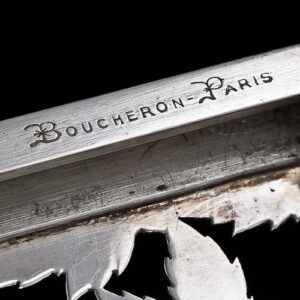
Maker’s marks are the initials, names, or other representative symbols stamped into a gold, silver, or platinum item. Also called “trademarks,” these marks often provide the only evidence that a certain piece of jewelry has indeed been manufactured by a certain jewelry maker.
Sometimes a goldsmith’s maker’s marks evolve over time. Understanding which mark was used during a specific period helps jewelry historians or appraisers accurately date an item.
The Role of Maker’s Marks in Jewelry Authentication
When such marks are present, the jewelry item is said to be “signed” by the maker or manufacturer. In some countries, like Italy, for example, official maker’s marks are assigned to registered goldsmiths and their use overseen by a body like the Chamber of Commerce.
These marks play a vital role in jewelry identification, helping experts confirm the legitimacy of an item. Additionally, maker’s marks can assist in providing the time period of manufacture thus placing the jewelry in its appropriate historical era.
Identifying Modern Jewelry Maker’s Marks
Spotting maker’s mark symbols stamped on jewelry requires a sharp eye and knowledge of common characteristics. Make sure you look for the following:
- Initials, logos, symbols, or full names stamped in discreet areas
- Letters, numbers, and other symbols unique to certain countries or historical periods
- Variations in maker’s marks signaling different production periods or partnerships with other jewelers
Using reference guides and verified databases helps to ensure accurate jewelry maker’s mark identification on antique, vintage and, estate jewelry.
Explore Our Jewelry Maker’s Marks Database
Antique Jewelry University offers an extensive Jewelry Maker’s Marks Database featuring hundreds of maker’s mark identification symbols stamped on jewelry from around the world. The database is continuously updated with additional makers and their marks as they become available.
Have a unique stamp or logo? Send clear images and details to aju@langantiques.com to contribute to our growing archive. Your submission could help others solve their own jewelry maker’s mark identification mysteries.
Jewelry Maker’s Mark FAQs
Curious about maker’s marks and their significance in jewelry? We’ve got answers!
Why are maker’s marks important for jewelry authentication?
Maker’s marks are crucial for confirming the legitimacy of a piece. They allow collectors and appraisers to trace the jewelry’s origin, date it accurately, and assess its historical and monetary value.
Where can I find the maker’s mark on my jewelry?
Maker’s marks are often stamped in discreet areas, such as the inside of a ring band, near the clasp of a necklace, or on the back of a pendant. You may need a magnifying glass or jeweler’s loupe to spot them.
Can a maker’s mark change over time?
Yes, a goldsmith’s or manufacturer’s mark can evolve over time due to changes in branding, partnerships, or regulations. Understanding these variations helps to date and value jewelry accurately.