
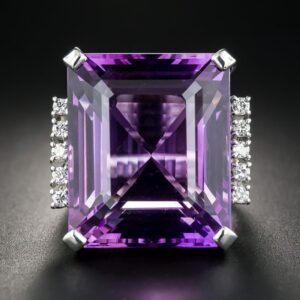
Amethyst is the most coveted member of the quartz family. It can be found in shades ranging from a very deep royal purple with hints of red, to a pale pastel lilac with subtle undertones of blue. The pale colors are sometimes called “Rose de France” and are often seen set in Victorian jewelry.
The amethyst owes its fabled color to trace amounts of manganese and iron. Its purple color made it a stone of royalty for many thousands of years and is seen in the British Crown Jewels. It was a favorite gem for Catherine the Great and considered sacred to Buddha in Tibet, where rosaries are often fashioned from it.
Before vast quantities of amethyst were discovered in Brazil, it was quite a rare gem, often commanding diamond prices! Amethyst is available in a wide range of calibrated sizes and shapes, including many fancy shapes and designer cuts.
Amethyst has been successfully synthesized in the lab, so buyers need to be sure their source is qualified to separate natural from lab-grown material.
A Brief History of Amethyst
Amethyst has been fashioned into gemstones and ornamental objects for thousands of years. Egyptian soldiers wore amethyst to remain calm during battle. In both ancient Persia and Peru, it was believed that amethyst, carved with the symbol of the sun warded off witchcraft.
The name amethyst is derived from the Greek “amethystos” meaning “not drunken”. It was supposed by the early Greeks that drinking wine from a chalice made of amethyst or placing an amethyst under the tongue would enable one to drink profusely without getting drunk. Leonardo Da Vinci wrote that amethyst was able to dissipate evil thoughts and quicken intelligence.
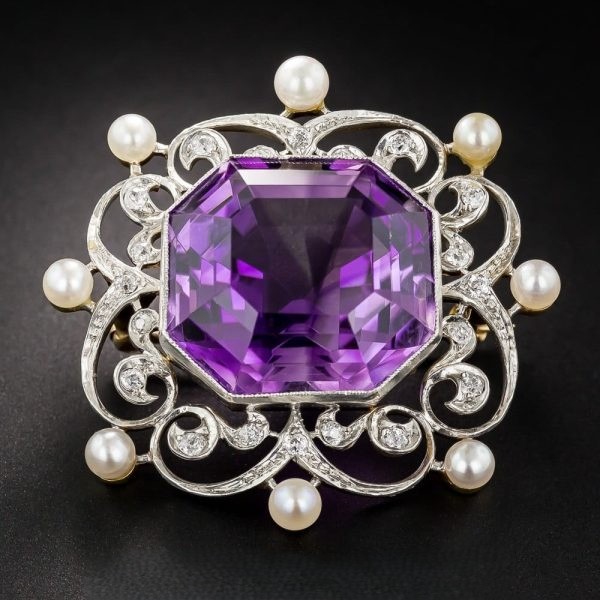

Art Deco Amethyst Cabochon Filigree Ring
With its cool curvilinear shape, the glistening, glowing 7.50 carat Popsicle-purple amethyst in this smile-inducing Art Deco jewel is supported by a lacy filigr…
SHOP AT LANG
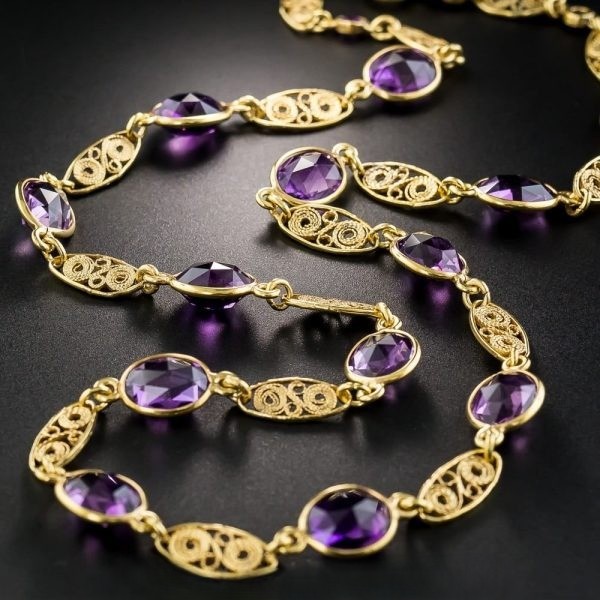
Victorian Graduated Amethyst Riviere Necklace by Birks, English
Popular since the 1800s, the rivière necklace, French for 'river,' has graced all manner of necks from stylish Victorians to Princess Margaret to Anna Wi…
SHOP AT LANG
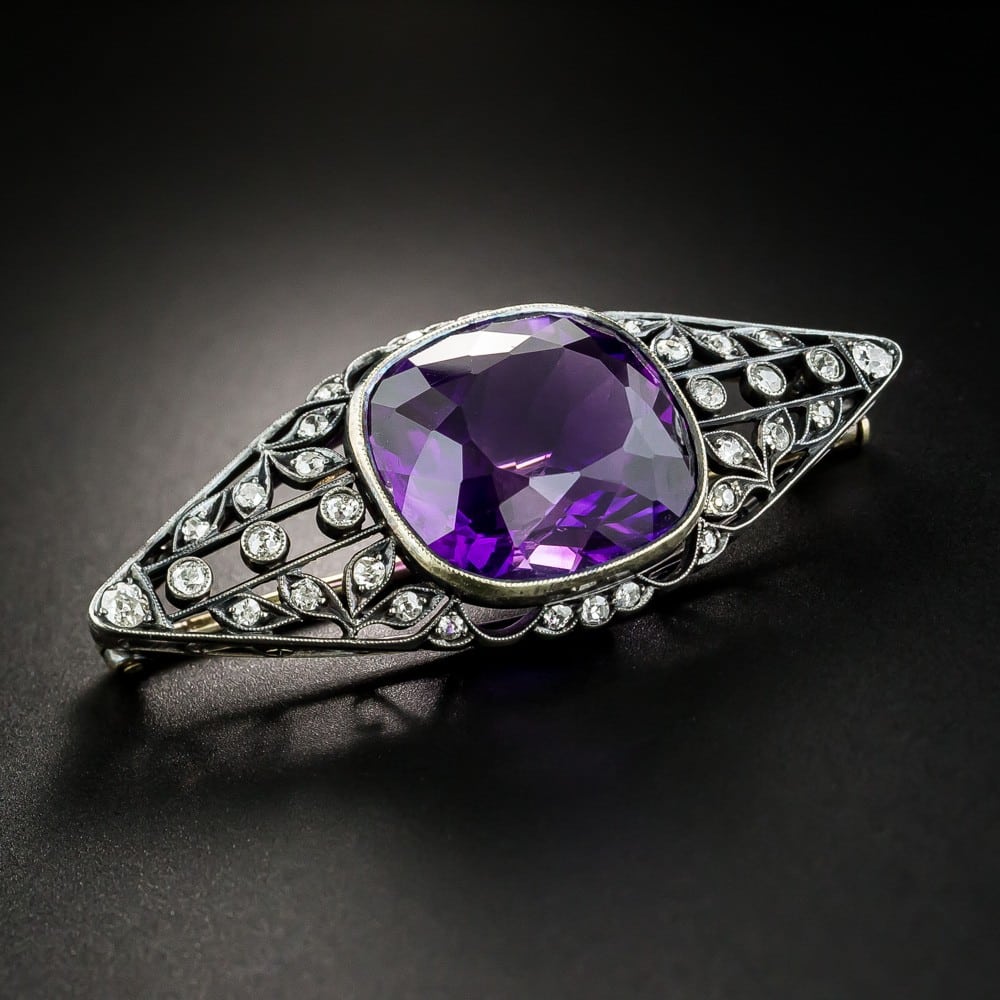
Victorian Amethyst and Diamond Shamrock Pendant/Brooch
You may have thought clovers were only green, but leave it to the Victorians to produce a purple one! Four heart-shaped, mirror-like amethyst leaves, sparkling…
SHOP AT LANG